The First Guitar Chords to Learn
Eight open chords cover an enormous number of songs. Here they are with clear finger-by-finger diagrams, the order to learn them in, and the first progressions to play.
Start with these eight open chords
Almost every beginner song is built from a small set of open chords — chords played near the top of the neck that let some strings ring open. Learn the eight below and you can strum along with a huge chunk of pop, rock, folk and country. Each diagram is captured straight from the interactive tool, so the numbers on the dots are the exact fingers to use.
How to read these diagrams
The grid is your fretboard: the vertical lines are strings (low E A D G B e high, labelled on the left), the numbers along the top are frets. Each coloured dot is a finger to press:
- The big number on a dot is which finger — 1 index, 2 middle, 3 ring, 4 pinky.
- The small letter under it is the note that finger plays.
- ○ (O) means play that string open — let it ring, don't press it.
- A string with no dot and no O isn't part of the chord — don't strum it. (For C and A, skip the low E; for D, skip the low E and A.)
The eight chords, easiest first
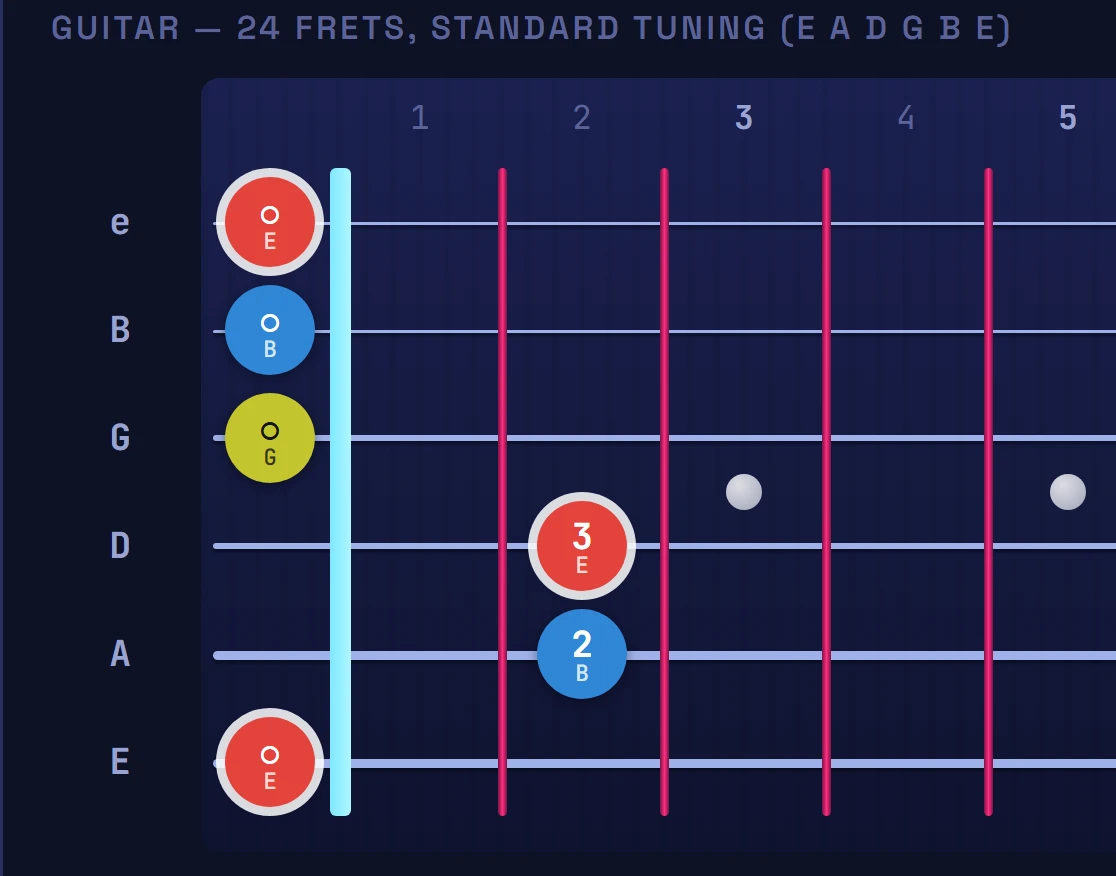
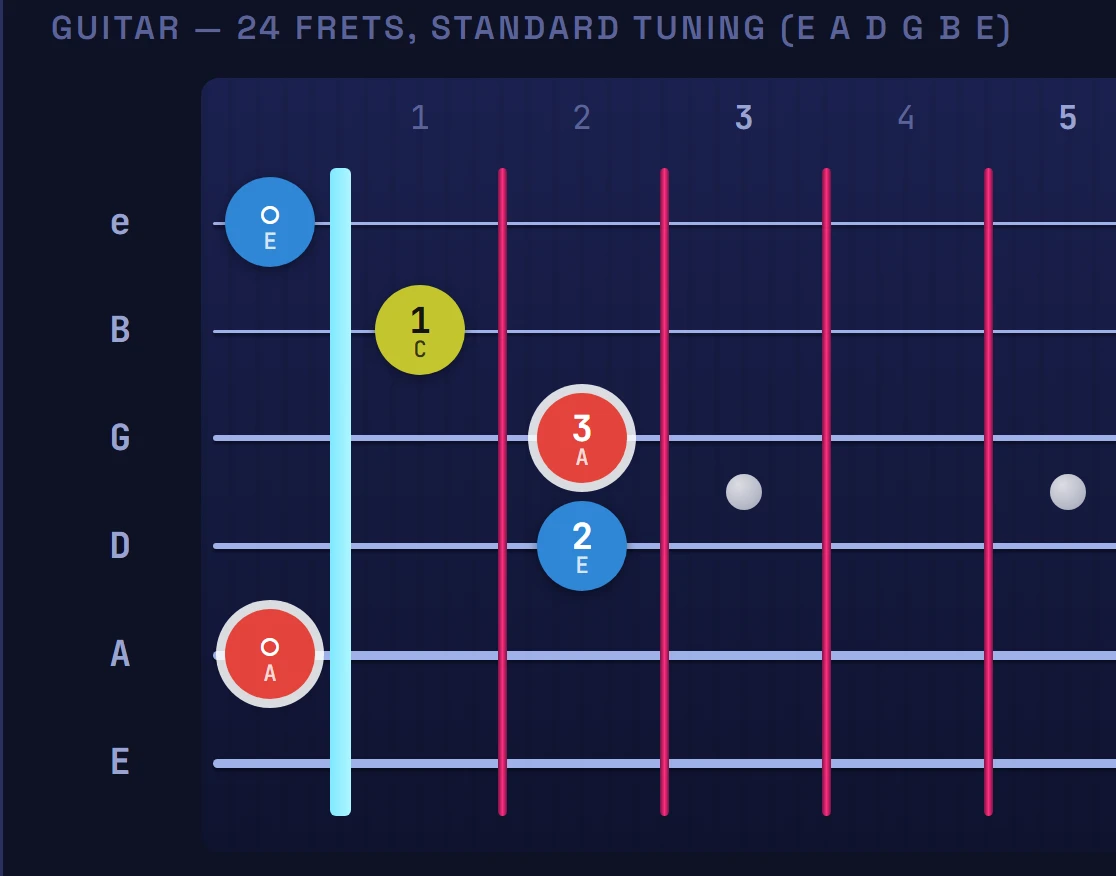
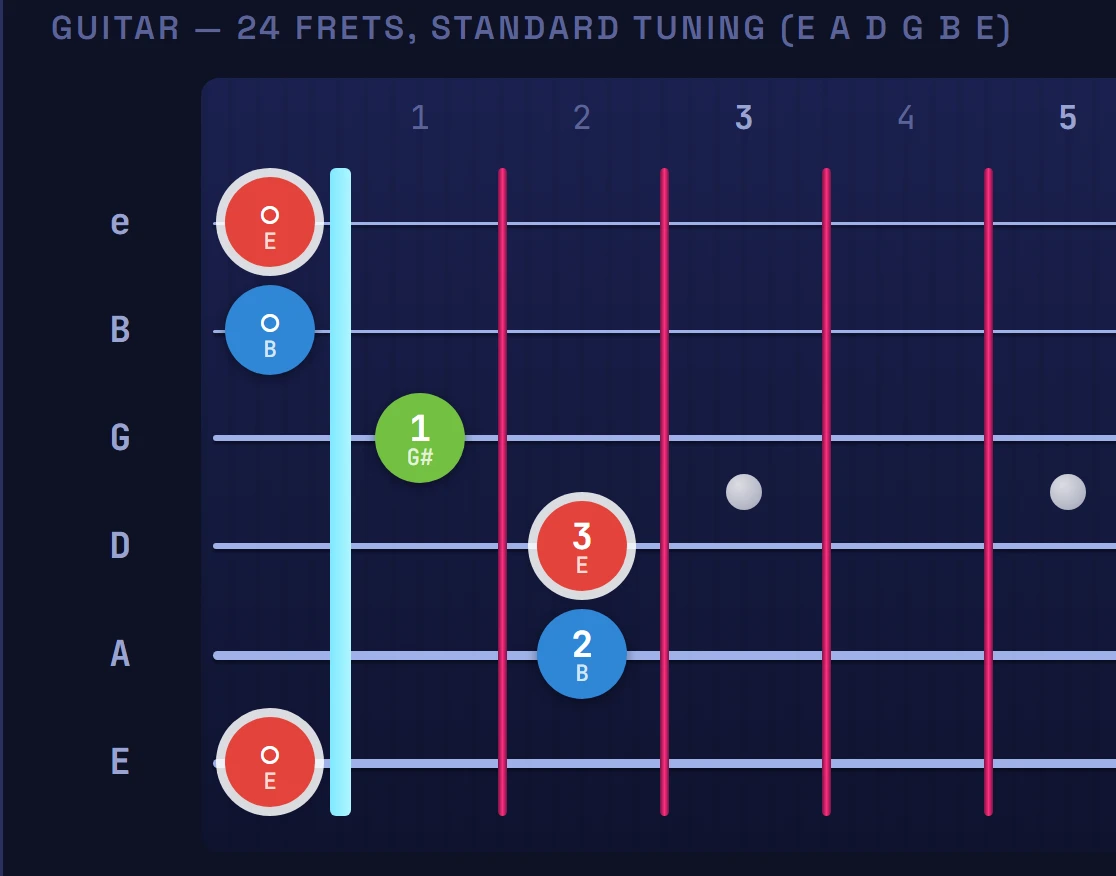
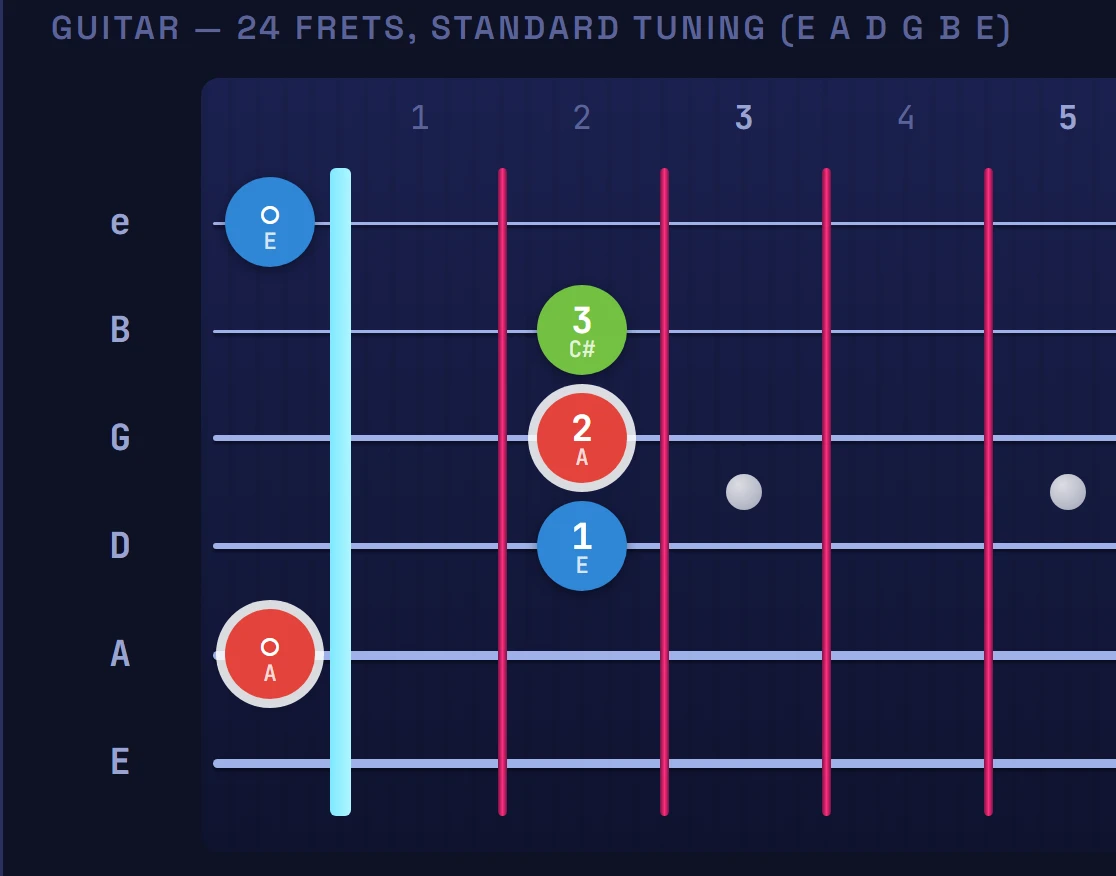
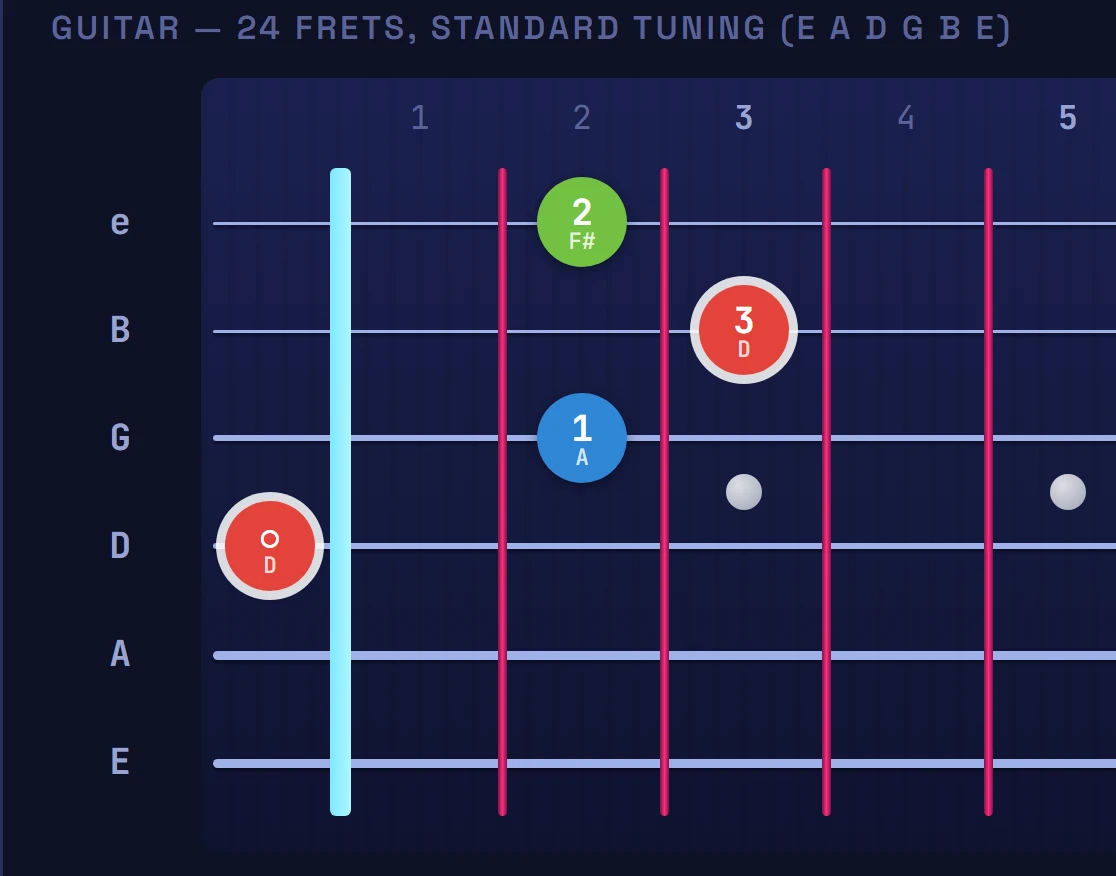
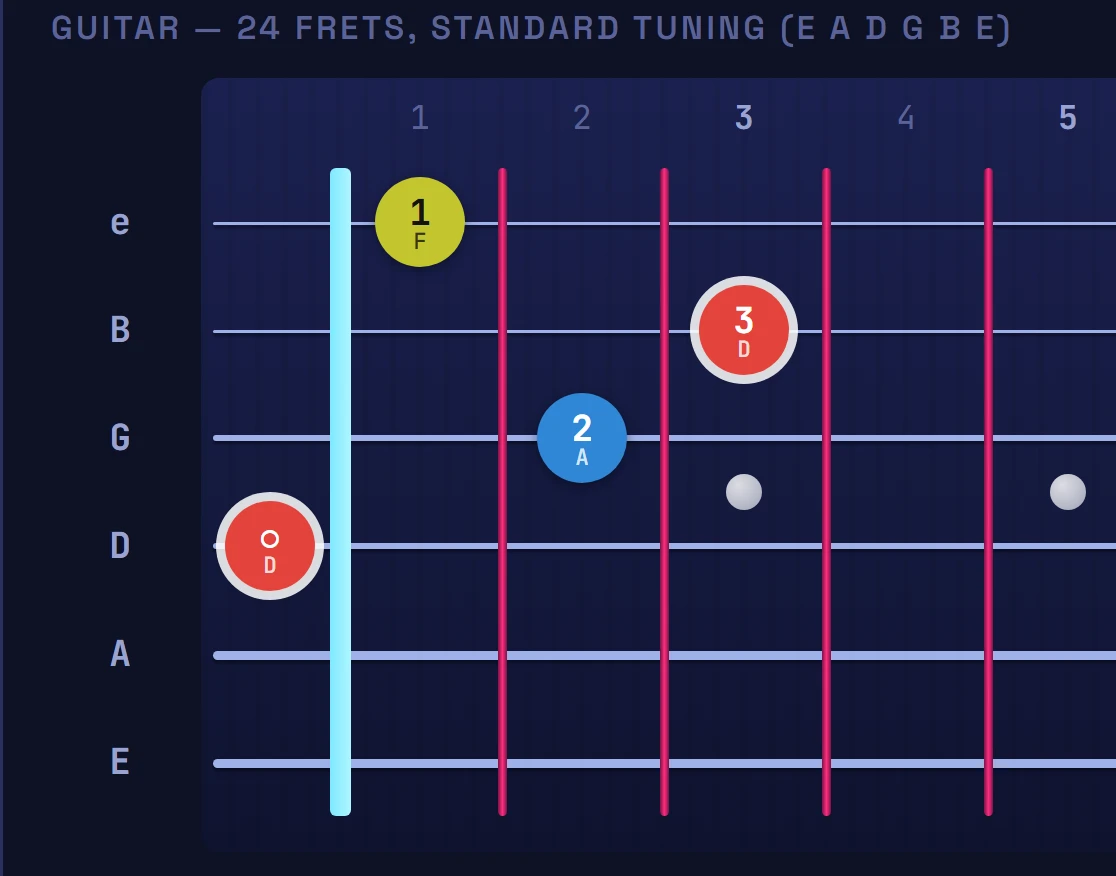
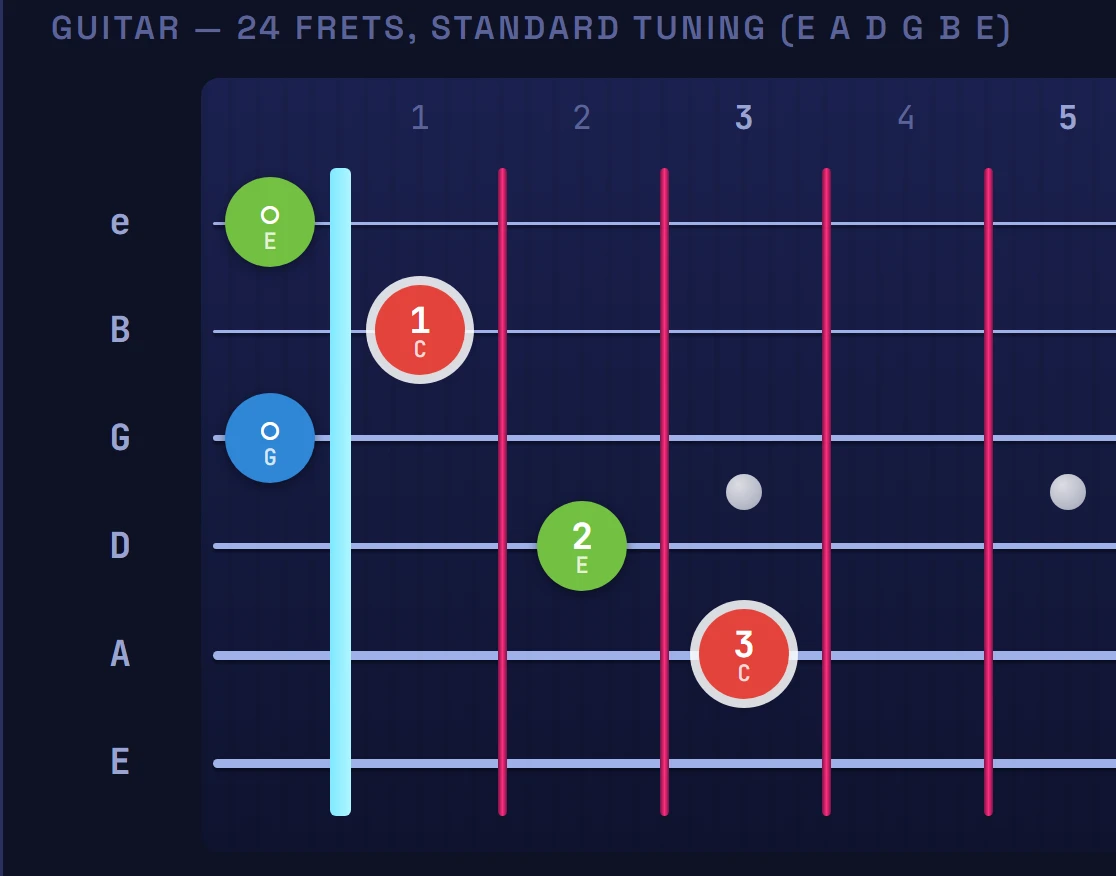
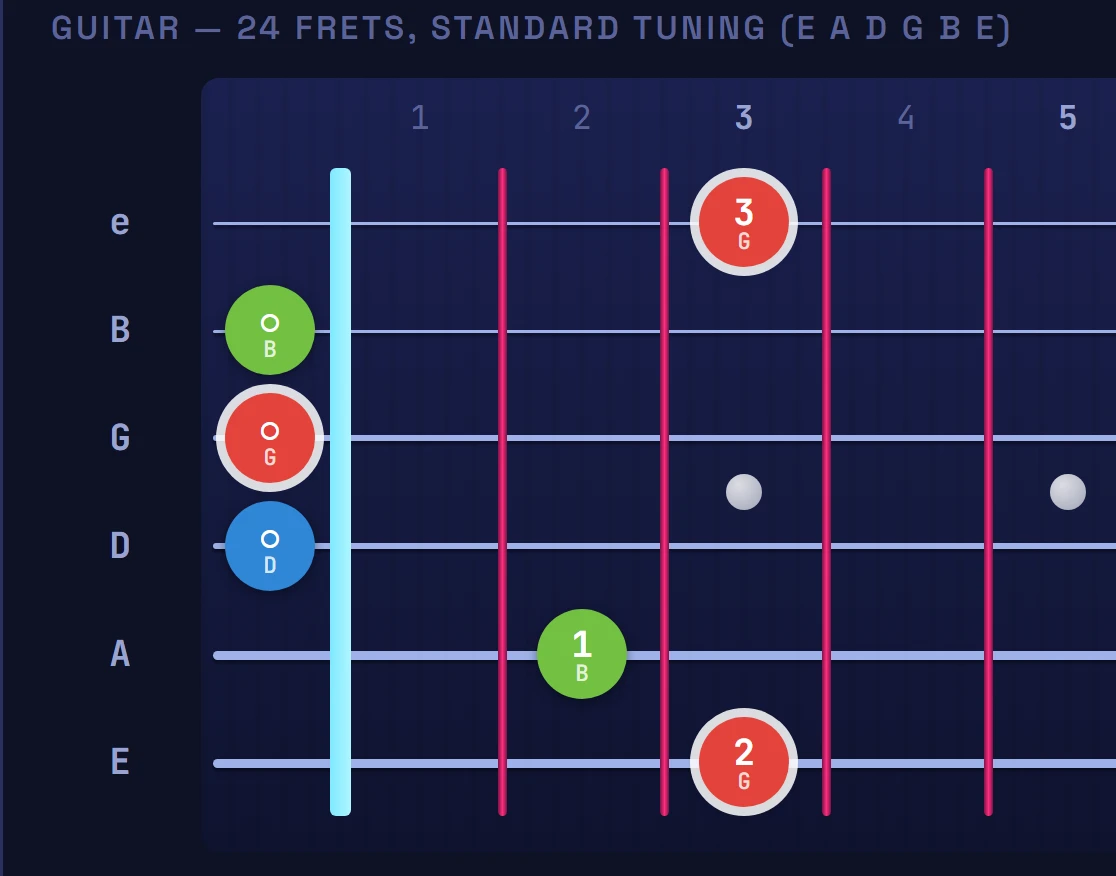
The order to learn them
Don't try to learn all eight at once. Work down the difficulty ladder:
- E minor & A minor — only two or three fingers, most strings open. Confidence builders.
- E major & A major — full, ringing majors that share shapes with the minors above.
- D major & D minor — compact top-string shapes; practise not hitting the low strings.
- C major & G major — the widest stretches, so they come last. Take them slowly.
Get each chord ringing cleanly — pluck every string it uses one at a time and make sure none buzz — before moving on. If some strings buzz or go dead, read why chords sound bad for the seven quick fixes.
Your first progressions
Chords come alive in progressions. Two to start with:
- G – C – D — the three-chord workhorse behind thousands of songs.
- Em – C – G – D — four beginner-friendly chords that sound instantly musical.
The real skill is switchingcleanly in time. Practise changing between just two chords over a steady beat, then add the third. The tool's Chord mode lets you see and hear every one of these shapes, and its chord-progression tools show how they fit together in a key.
Reading only gets you so far — open the interactive fretboard and watch these ideas light up on guitar and piano.
Enter the toolFrequently asked
What are the first guitar chords I should learn?
Start with E minor and A minor — they use just two or three fingers and most strings ring open. Then learn E, A and D, and finally C and G, which need bigger stretches. Those eight open chords let you play a huge number of songs.
How do I read a guitar chord diagram?
Each dot is a finger: 1 = index, 2 = middle, 3 = ring, 4 = pinky, and the small letter is the note it plays. A circle marked ○ (O) means play that string open — don't press it. A string with no dot and no O isn't part of the chord, so don't strum it (for C and A skip the low E; for D skip the low E and A).
In what order should I learn open chords?
By how hard they are to fret: E minor and A minor first (2–3 fingers), then E and A, then D and D minor, then C and G, which involve the widest stretches. Learn one, get it ringing cleanly, then add the next.
What's a good first chord progression to practise?
G – C – D is the classic three-chord workhorse behind thousands of songs. Em – C – G – D is another that sounds great and is beginner-friendly. Practise switching between two chords in time before adding a third.
Why do my chords sound buzzy or muted?
Usually your fingers aren't arched enough (so they mute the next string), you're not pressing just behind the fret, or you're strumming a string the chord doesn't use. See our guide on why chords sound bad for the seven common fixes.